Our approach
Every feature in Greenline exists because of a belief about how your finances should work. Here's what we think.


Hi, we're Sammy and Luis.
We lead a small team building Greenline. We started it because we couldn't find a portfolio tracker that worked the way we wanted: across every brokerage, without handing over our bank logins, with insight that actually helps. We all use it every day.
Read our story

How we built it
Why we've built things the way we have.

Why we don't link your bank account
Most portfolio trackers ask you to connect your bank account directly. It's convenient. But there are trade-offs worth understanding before you do. We used Mint for years before realizing linking our bank accounts could void our fraud protection.
Security
Sharing your banking credentials may void your bank's fraud protection. It can break your account agreement, leaving you on the hook for unauthorized transactions.
Reliability
Connectors break constantly. Logins fail, accounts disconnect, balances come back wrong, transactions go missing. The data you trust most ends up the data you trust least.
Cost
Connectors charge per connection. Those costs get passed on through higher subscription fees. You pay for the convenience, twice.
We decided early on that convenience wasn't worth that trade.
What we do instead
You upload your statements yourself. It takes a few minutes instead of a few seconds. But your bank guarantees stay intact, your credentials stay with you, and your data doesn't pass through a third-party connector.
- CSV exports from your brokerage
- PDF statements
- Screenshots of holdings
- Manual entry, if you prefer
This isn't a permanent stance. When Canada's open banking framework can deliver auto-sync safely and reliably, we'll revisit.
I would've built my own Excel spreadsheet, but I never did because it was too hard. Greenline let me upload a few statements and have it all there.

We show, we don't tell.
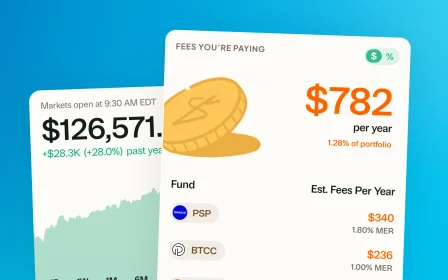
Greenline will show you that a fund charges 1.2% in fees. It will show you a similar fund that charges 0.2%. But it won't tell you to switch. That decision is yours, and it should be.
What we show
You're 80% in tech.
What we don't say
"Diversify."
What we show
A position grew to 20% of your portfolio.
What we don't say
"Trim."
What we show
A fund cut its dividend.
What we don't say
"Sell."
You know your situation. You know your timeline, your goals, your other accounts, your tax bracket, your risk tolerance. We don't. Showing you what's actually going on is honest. Telling you what to do without that context isn't.

Information, not instructions.
There's a difference between "you're paying $400 a year in fees you might not need to" and "sell this fund and buy that one." The first gives you something to think about. The second assumes we know your situation better than you do. We don't.
A real example
Friends have offered to pay us to manage their money, some suggesting rates as high as 5%, without knowing whether that was reasonable. That's the problem. Fees are hard to evaluate without context, and that context is rarely provided.
We'd rather show you the numbers and let you decide.