

VIGG ETF: what the Vanguard Developed ex-North America Dividend Appreciation Index ETF is


Short answer: VIGG is the Vanguard Developed ex-North America Dividend Appreciation Index ETF, listed on the TSX in June 2026. It holds developed-market companies outside Canada and the U.S. that have a record of raising their dividends, at a 0.28% management fee. It is an international dividend-growth tilt, not a core holding on its own.
VIGG is Vanguard Canada’s way to add international dividend growers to a Canadian portfolio in one ticker. The “dividend appreciation” idea is specific and worth understanding: the index does not chase the highest yields, it screens for companies that have consistently increased their dividends over time, which tends to favour stable, profitable businesses. This is not financial advice, and fund details change, so check Vanguard’s current disclosures before acting.
What VIGG actually is
TSX-listed and built to track an index of dividend-growth companies in developed markets outside North America: think Europe, Japan, and developed Asia-Pacific. Because it deliberately excludes Canada and the U.S., it is designed to sit beside your North American holdings, not duplicate them.
| Attribute | Value |
|---|---|
| Ticker | VIGG (TSX) |
| Issuer | Vanguard Canada |
| Launch | June 2026 |
| Exposure | Developed markets ex-Canada and ex-U.S. |
| Strategy | Dividend appreciation (dividend growers, not highest yield) |
| Management fee | 0.28% |
Dividend growth versus high yield
Who VIGG is for
VIGG fits an investor who already holds Canadian and U.S. equity and wants to round out the international slice with a quality, dividend-growth tilt. It is a complement, not a one-fund solution. If you would rather not manage geographic weights at all, a single all-in-one ETF like VEQT or XEQT already holds international developed markets inside it, no separate ticker required.
Two things to keep in mind. First, the foreign withholding tax idea applies to international dividends too, and the treatment depends on the account, so registered placement is worth thinking about. Second, VIGG is unhedged, so the currency moves of the euro, yen, and others will show up in your returns.
Frequently asked questions
What does VIGG hold?
VIGG holds stocks of developed-market companies outside Canada and the U.S. that have a history of increasing their dividends. That tilts it toward established European, Japanese, and developed Asia-Pacific businesses, and away from both North America and the highest-yield names.
Is VIGG a good ETF?
It is a reasonable, low-fee way to add an international dividend-growth tilt, at 0.28%. Whether it is right for you depends on your other holdings: it is a complement to a North American core, not a standalone portfolio. If you already own a broad all-in-one ETF, VIGG would overlap with the international exposure you already have.
What is VIGG’s yield?
As a dividend-appreciation fund, VIGG screens for dividend growth rather than maximum yield, so its headline yield is typically lower than a high-yield fund. Because the fund is new, look to Vanguard’s current factsheet for the live distribution yield rather than relying on a fixed number.
Is VIGG hedged to Canadian dollars?
No. VIGG is unhedged, so movements in foreign currencies against the Canadian dollar affect your returns. If you want to remove that currency swing on the U.S. side specifically, Vanguard’s CAD-hedged VUDH is a different fund built for that.
The honest verdict
Bottom line
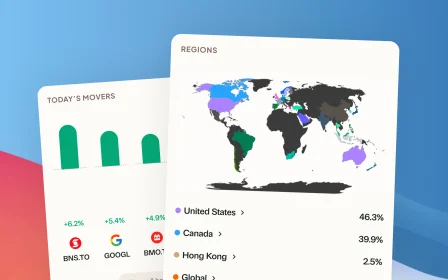
VIGG is a clean, low-cost way to tilt toward international dividend growers, and the dividend-appreciation screen is a sensible one. Just place it as the international complement it is, not a core, and remember it overlaps with the international slice of any all-in-one fund you already own. Whatever you add, Greenline shows you your real geographic and sector exposure across every account, so a new tilt does not leave you doubled up without realizing it.
Researching a fund is one thing. Seeing how it fits with everything else you own is another. If you ever want everything you own in one view, that's what Greenline is for.
More in DIY Investing

VUDV ETF: what the Vanguard U.S. High Dividend Yield Index ETF is, and VUDV vs VUDH

VUDH ETF: what the Vanguard U.S. High Dividend Yield Index ETF (CAD-Hedged) is

Currency-hedged ETFs: do you actually need them?

Just buy XEQT? The one-ETF strategy explained

20 newer Canadian ETFs that have earned a real track record
VUDV ETF: what the Vanguard U.S. High Dividend Yield Index ETF is, and VUDV vs VUDH
VUDV is Vanguard Canada's U.S. high-dividend ETF on the TSX, unhedged, 0.28% fee, tracking the FTSE High Dividend Yield Index of 560+ U.S. stocks. Here's how it works and how it compares to the hedged VUDH.
VUDH ETF: what the Vanguard U.S. High Dividend Yield Index ETF (CAD-Hedged) is
Currency-hedged ETFs: do you actually need them?
Just buy XEQT? The one-ETF strategy explained