

When to consolidate brokerages (and when not to)


Short answer: Consolidate brokerages when you have small forgotten accounts at high-fee banks, when an old account holds expensive mutual funds, or when the multi-account complexity is hurting your visibility. Don’t consolidate just to consolidate; some splits (employer RRSP match, spouse’s accounts) are worth keeping.
My investing life has left a trail of accounts at different institutions. I started with Tangerine mutual funds. Then I went into a TD branch to open a self-directed account (the advisor tried to sell me products, I politely declined everything, and by the end he said “you know your stuff” and recommended I watch Billions). Later I opened accounts elsewhere as better platforms came along. At one point I had three logins, three sets of statements, and no single place that showed me the full picture.
I eventually consolidated most of it. But the process was messier than I expected. Transfer forms with questions I didn’t have answers to. Phone calls to confirm things that should have been automatic. Weeks of waiting. It would have gone much smoother if I’d thought through a few things first.
When consolidating makes sense
The strongest case for consolidation is simplicity. Fewer logins, fewer statements, fewer places to check when you want to know how your money is doing. If you have accounts scattered across three or four platforms, there’s real value in having everything in one spot.
It also tends to lower your total costs. Old accounts at banks often hold mutual funds with MERs north of 2%. If those accounts are just sitting there, quietly charging fees on money you haven’t looked at in years, consolidating into a low-cost platform can save you thousands over time.
And then there’s the visibility problem. When your money is spread across multiple brokerages, it’s hard to know what your actual asset allocation looks like. You might think you’re diversified because each account has a different mix. But when you add it all up, you could be overweight in one area without realizing it. I wrote more about this in the multi-account problem.
If you have an old account with a small balance that you haven’t contributed to in years, that’s almost always worth consolidating. There’s no upside to leaving $3,000 in a forgotten account at a bank charging high fees.
When it doesn’t
Consolidation isn’t always the right move. There are legitimate reasons to keep accounts at more than one institution.
CDIC coverage, for one. The Canada Deposit Insurance Corporation covers eligible deposits up to $100,000 per institution. If you hold GICs or cash savings across different banks, you get separate coverage at each one. Consolidating everything to a single institution means your coverage is capped at $100,000 total for eligible deposits. For most people with investment portfolios this isn’t the main concern, since CDIC doesn’t cover stocks, ETFs, or mutual funds. But if you hold significant cash or GICs, it’s worth knowing.
Some brokerages are genuinely better at specific things. Maybe one has better options trading tools, or another offers USD accounts with no conversion fees. If you actively use features that your “main” brokerage doesn’t have, keeping a second account for that purpose makes sense.
Workplace accounts are another common exception. If your employer offers a group RRSP or DPSP with a match, you want that match. You might not love the platform, and the fund options might be limited, but free money is free money. Some of these plans also restrict transfers while you’re still employed. You might be stuck with it until you leave, and that’s fine.
Transfer fees can also give you pause. Many brokerages charge $50 to $150 per account to transfer out. If you have multiple accounts, those fees add up. This isn’t a reason to never consolidate, but it’s a reason to plan the timing carefully.
How transfers actually work
There are two ways to move your investments from one brokerage to another.
The first is an in-kind transfer. This means your actual holdings move as they are. If you own 100 units of XEQT at your old brokerage, those same 100 units show up at your new brokerage. You don’t sell anything. This is important for non-registered accounts, because selling triggers capital gains tax. If your investments have gone up since you bought them, an in-kind transfer lets you move without a tax event.
The second option is to sell everything, transfer the cash, and rebuy at the new brokerage. This is simpler in some ways, but in a non-registered account, you’ll owe tax on any gains. In a TFSA or RRSP, there’s no tax consequence either way, so selling and rebuying is often easier. It also gives you a clean start if you want to switch to different funds.
One thing people don’t always realize: many receiving brokerages will reimburse your transfer-out fee. You usually have to ask, and there’s often a minimum account size, but it’s common. Wealthsimple, Questrade, and several others have done this. It doesn’t hurt to ask before you initiate the transfer.
The process itself typically takes two to four weeks. Sometimes longer if the sending brokerage is slow or if there’s paperwork issues. It’s not instant, and during the transfer your holdings are in limbo. You can’t trade them. Worth knowing if markets are volatile and you’d want to make changes.
None of this is financial advice. Transfers involve tax implications, fees, and timing that depend on your specific situation. If you’re unsure about the tax side, it’s worth talking to someone who can look at your numbers.
The middle ground
Here’s the thing most “should I consolidate” articles skip. You don’t have to pick one brokerage for everything.
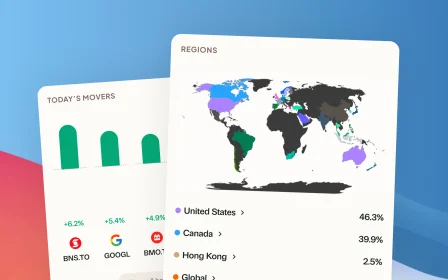
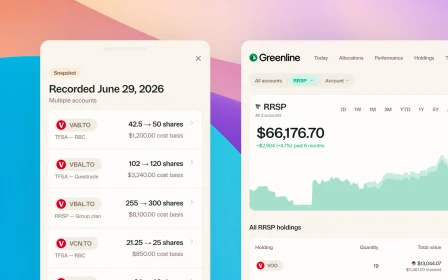
Sometimes the answer is keeping two accounts but having a way to see them together. The real frustration with multiple accounts isn’t that they exist. It’s that you can’t see the combined picture. You log into one and see half your portfolio. You log into another and see the other half. Neither gives you the full view.
If you can solve the visibility problem, the urgency to consolidate drops significantly. Two accounts that you can see as one portfolio is a perfectly fine setup. Three accounts where each one feels like a separate financial life is where things get messy.
The question isn’t really “how many brokerages should I have.” It’s “can I see my full picture clearly enough to make good decisions.” If the answer is yes, it doesn’t matter whether that picture comes from one platform or three.
Consolidation is a tool, not a rule
Moving everything to one brokerage can simplify your life, lower your fees, and make it easier to manage your money. But it’s a tool, not a commandment. Use it when it genuinely makes things better, not because someone on Reddit told you that having two brokerages is wrong.
If you have old, forgotten accounts with high-fee funds, consolidate. If you have a workplace plan with a match, keep it. If you just want to see everything in one place without actually moving anything, that’s a valid solution too.
The goal was never to have the fewest possible accounts. The goal is to know what you own, across everything, and to feel like you’re in control of it.
The goal was never to have the fewest possible accounts. The goal is to know what you own, across everything, and to feel like you’re in control of it.
The big picture only comes together when every account you have sits in a single view. Seeing it all in one place is what we built Greenline to do, if you ever want a hand.
More in The Big Picture

The multi-account problem
Brokerage comparison: what to look for in Canada

Your portfolio is one thing, not five accounts

How to transfer investments between brokerages
The multi-account problem
TFSA here, RRSP there, spouse's account somewhere else. No single place shows you the whole picture. You're making decisions without seeing the full board.
Brokerage comparison: what to look for in Canada
Your portfolio is one thing, not five accounts
You don't have five portfolios. You have one portfolio spread across five accounts. That mental shift changes how you make every investment decision.