The most common mistakes new Canadian investors make


The quick take: The most common mistakes new Canadian investors make are waiting for the perfect moment to start, ignoring fees, holding cash inside a TFSA, picking single stocks before owning broad index exposure, and panic-selling during downturns.
The first investment I ever made was into a Tangerine mutual fund. I didn’t compare fees. I didn’t think about which account type to use. I didn’t look at what was inside the fund. I just picked the one that said “balanced growth” and put $5,000 in.
It worked out fine, honestly. That money grew, and watching it grow is what made investing real for me. But I also spent years paying fees I didn’t understand, in an account structure that wasn’t optimal, holding a fund I’d never actually examined. I got lucky that the mistakes were small. A lot of people aren’t.
I’ve spent the years since helping friends, family, and eventually strangers figure out their money. The same mistakes come up over and over. Not because people are careless, but because nobody teaches this stuff, and the defaults are designed to benefit someone other than you.
This isn’t financial advice. It’s a list of patterns I’ve seen too many times, including in my own portfolio.
Waiting for the perfect moment to start
This is the most expensive mistake on the list, and it doesn’t feel like a mistake at all. It feels responsible. “I’ll start investing once I’ve done more research.” “I’ll wait until the market calms down.” “I want to make sure I’m doing it right.”
I get it. I had those same thoughts. But the math is clear: time in the market matters more than almost any other variable. Someone who invests $200 a month starting at 25 will have dramatically more at 60 than someone who starts at 35 with the same amount, even if the late starter picks better investments.
And if you’re specifically waiting for a crash to buy in, you’re probably going to keep waiting. Crashes don’t feel like sales. They feel like the worst possible time to invest. Every single person I know who was “waiting for a dip” stayed on the sidelines when the dips actually came.
The perfect moment doesn’t exist. The second best time is now.
Not knowing what you’re paying
When I started, I had no idea what a MER was. Nobody mentioned fees when I opened my account. Nobody told me that a 1% management fee might sound small but compounds into tens of thousands of dollars over a lifetime.
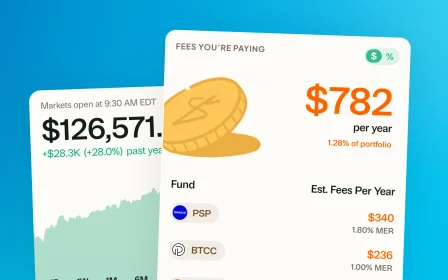
Here’s the thing about investment fees: they’re designed to look small. A 2% MER on a mutual fund doesn’t sound like much. But if your investments return 7% in a year, you’re giving up nearly a third of your gains. Over 30 years, the difference between a 0.2% fee and a 2% fee on a $100,000 portfolio is well over $100,000. That’s not a rounding error. That’s a second portfolio.
I don’t think high fees are always wrong. Some people genuinely want advice and service, and that costs money. But you should know what you’re paying and decide whether the service is worth it. Most people I talk to have never looked.
Putting everything in Canada
My early portfolio was almost entirely Canadian. Banks, telecoms, energy companies. I knew the names. I banked with them. I filled up at their gas stations. It felt like I was being smart by investing in what I understood.
But Canada represents roughly 3% of global stock markets. When I looked at what I actually owned, I had more than 80% of my money in that 3%. I wasn’t diversified. I was making a concentrated bet on one of the smallest developed markets in the world.
This is called home market bias, and almost every Canadian investor has it to some degree. The banks and telecoms do pay nice dividends, and there are real tax advantages to holding Canadian stocks in certain accounts. But there’s a difference between a deliberate 25% Canadian tilt and an accidental 80% concentration because you only bought names you recognized.
Treating all accounts the same
For years, I didn’t think about which investments went in which account. I just bought whatever I wanted, wherever I had room. TFSA, RRSP, non-registered. Didn’t matter. Same stuff in all of them.
That’s a real missed opportunity. The TFSA and RRSP have completely different tax treatments, and what you hold inside them matters. Growth-oriented investments in your TFSA make sense because all the gains are tax-free. Canadian dividend stocks in a non-registered account get preferential tax treatment through the dividend tax credit. US-listed ETFs in your RRSP avoid the 15% foreign withholding tax.
You don’t need to become a tax strategist. But understanding the basics of which investments go where can save you real money over time, without changing what you invest in at all.
Making it way too complicated
There’s a phase a lot of new investors go through where they discover stock picking and want to build the perfect portfolio. Ten ETFs, a handful of individual stocks, maybe some REITs, sector-specific funds, a small cap tilt. They read about factor investing and start adding complexity on top of complexity.
I went through this phase. I had a spreadsheet with dozens of holdings, each one carefully chosen. And you know what? My returns were almost identical to what I would have gotten from buying a single all-in-one ETF. All that work, all that research, all that rebalancing, for roughly the same result.
For most people, a one-ETF portfolio is genuinely enough. It gives you global diversification, automatic rebalancing, and rock-bottom fees. You can always add complexity later if you want to. But starting simple isn’t settling. It’s often the smarter move.
Checking your portfolio every day
I used to check my portfolio multiple times a day. Before work, during lunch, before bed. Every red day felt like a problem I needed to solve. Every green day felt like validation.
Neither feeling was useful. Daily price movements are noise. They tell you almost nothing about whether your investments are good long-term holdings. But they do something worse: they make you want to act. Sell the thing that’s down. Buy more of the thing that’s up. Every check is a temptation to make a move you don’t need to make.
The investors who do best over long periods tend to be the ones who check the least. I’m not saying ignore your portfolio entirely. But checking once a month, or even once a quarter, is more than enough for most people. Anything more than that and you’re just watching noise.
Panic selling during a downturn
I’ve watched friends sell at the worst possible time. March 2020, the market dropped 34% in five weeks. One friend moved everything to cash because, in his words, “it’s too volatile for me to weather right now.” He planned to buy back in when things “stabilized.”
By the time things felt stable, the market had already recovered most of the drop. He bought back in at roughly the same price he’d sold at, minus the fees, minus the stress, minus the weeks of agonizing over when to get back in. He would have been better off doing literally nothing.
A bad month is not a reason to sell. A bad quarter isn’t either. If you’re investing for 10, 20, 30 years, short-term drops are expected. They’re the price of admission for long-term growth. The math on staying invested is overwhelmingly clear: missing even a handful of the best recovery days can cut your long-term returns in half.
Skipping the emergency fund
This one is easy to overlook because it’s not really about investing. But it’s the foundation everything else sits on.
If you don’t have an emergency fund and something goes wrong, a job loss, a car repair, an unexpected bill, you’ll be forced to sell investments to cover it. Maybe at a loss. Maybe in a down market. That turns a temporary problem into a permanent one.
Three to six months of expenses in a high-interest savings account. That’s the buffer. It’s not exciting. It earns almost nothing compared to the market. But it’s the thing that lets you stay invested when life gets messy, and staying invested is the whole game.
Not keeping records
When tax season comes around, I see the same scramble every year. People trying to piece together their adjusted cost base from memory, digging through old emails for trade confirmations, guessing at which lots they sold.
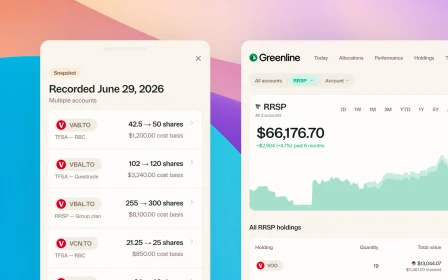
Keeping a record of your investments doesn’t just make taxes easier. It gives you clarity. You can see what you bought, when, and why. You can track your actual performance instead of guessing. And when you eventually sell, you’ll have the numbers you need instead of an expensive conversation with an accountant trying to reconstruct years of trades.
This is one of those things that takes five minutes per trade and saves hours later. Start from day one if you can. If you haven’t been tracking, it’s not too late to catch up, but the sooner you start, the easier it is.
The biggest mistake is thinking you need to be perfect
Every single investor you admire has made some version of these mistakes. They paid too much in fees for too long. They held too much of one thing. They sold something they shouldn’t have. They waited too long to start.
The difference between investors who do well and investors who don’t isn’t that one group avoids all mistakes. It’s that one group starts anyway, learns along the way, and keeps going. The other group keeps waiting until they feel ready.
You don’t need to get everything right. You just need to get started, pay attention, and adjust as you learn. That’s the whole strategy.
More in Your First Moves

Where to start as a new Canadian investor

Investing in your 20s in Canada: what I wish I'd known

What you're actually paying in investment fees

Home market bias: over-investing in Canada
Just buy XEQT? The one-ETF strategy explained
Where to start as a new Canadian investor
Not sure where to begin? This is my recommended reading order for anyone starting from scratch.
Investing in your 20s in Canada: what I wish I'd known
What you're actually paying in investment fees
Home market bias: over-investing in Canada